How much should you have in your pension at 30, 40, 50 and 60?
Most people have no idea whether their pension is on track. You get a statement once a year, glance at a number, and have nothing to compare it with. Is £40,000 at 38 good? Is it terrible? It’s genuinely hard to tell.
There’s no single right answer, because it depends on what you earn and what kind of retirement you want. But a simple yardstick helps, so I built one.
A benchmark by age
The idea is to measure your pension pot as a multiple of your salary. That way the benchmark works whether you earn £25,000 or £75,000. I assumed someone who starts saving at 25, puts in 12% of their salary every year (between them and their employer), and earns 2.5% a year above inflation. All the figures are in today’s money.
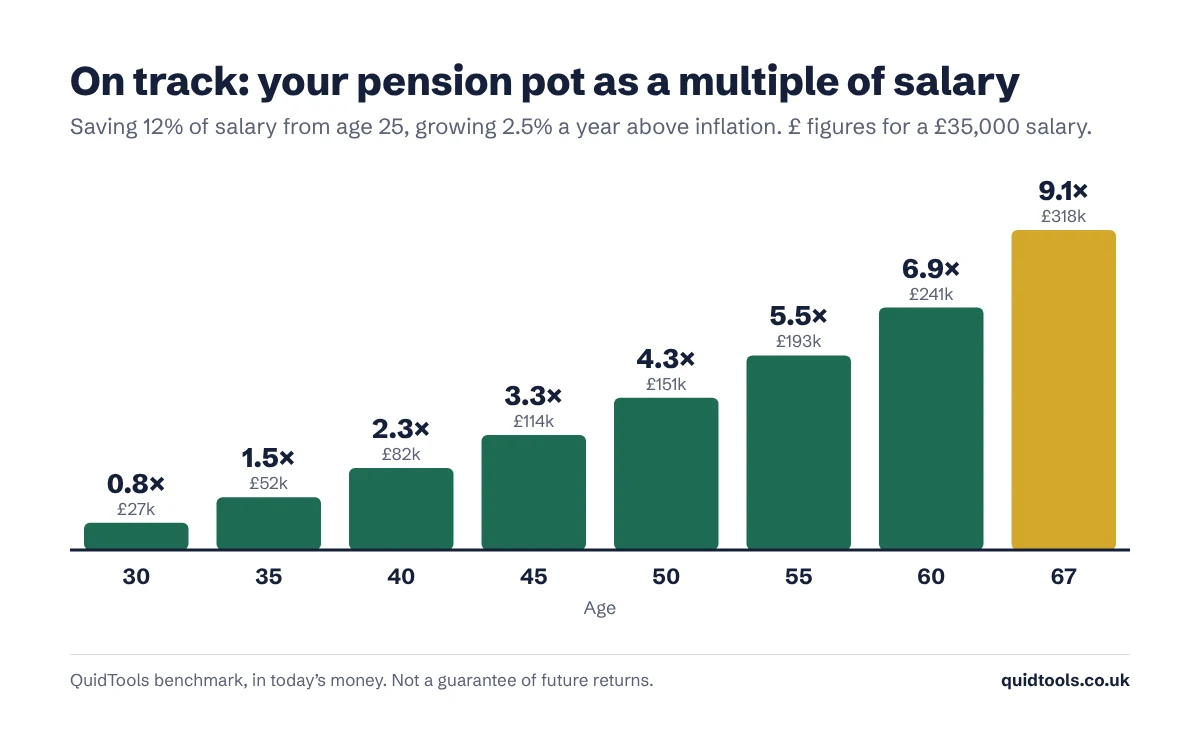
On a £35,000 salary, that works out at around £82,000 by 40, £151,000 by 50, and about £318,000 by the time you reach State Pension age.
Don’t panic if you’re below the line. These are rough markers, not pass marks. Lots of people start late, take career breaks or have years where saving just isn’t possible. What matters is the direction of travel.
What that pot actually buys you
A pot of £318,000 could pay out roughly £12,700 a year if you took about 4% of it each year. Add the full new State Pension of £12,548 this year and you’d have about £25,300 before tax, which is a bit over 70% of a £35,000 salary.
Whether that’s enough depends on how you want to live. The Retirement Living Standards, updated every year, give a useful guide to what retirement actually costs.
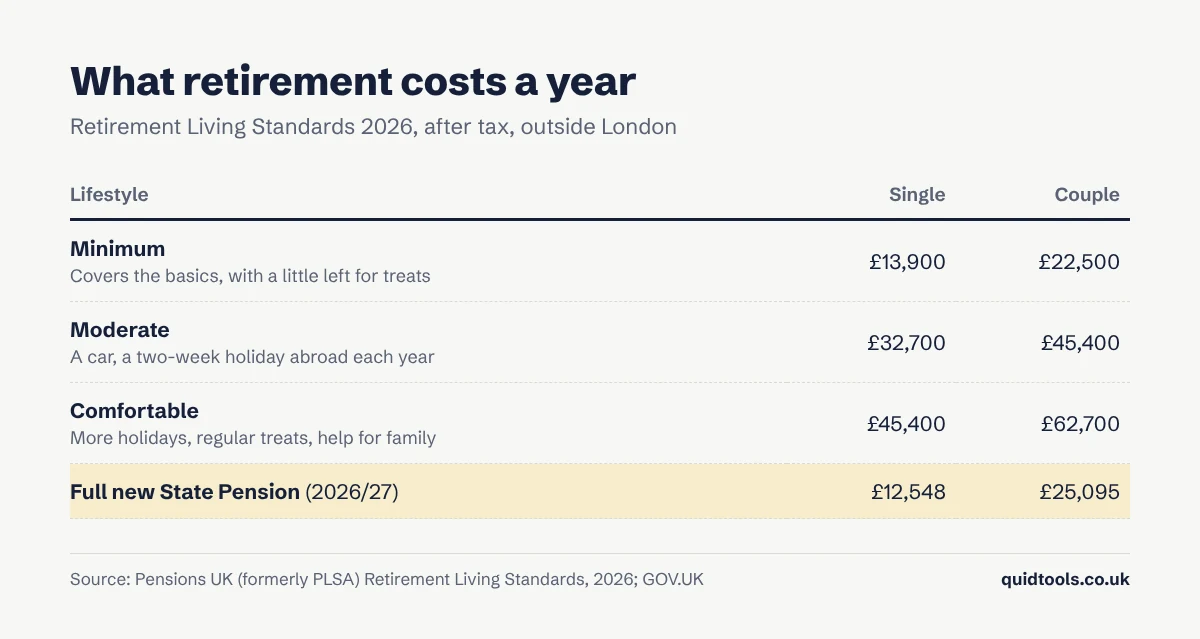
The striking thing is how much a partner helps. Two full State Pensions alone more than cover the minimum for a couple. A single person relying on the State Pension alone falls short of even the minimum.
These figures assume you own your home outright. If you’ll still be paying rent or a mortgage in retirement, you’ll need considerably more.
If you’re behind
Starting late makes a real difference, but it’s fixable. On the same assumptions, someone who doesn’t start saving until 35 reaches about 6 times their salary by 67 instead of 9. To catch up, they’d need to save around 16% of their salary rather than 12%.
A few things make catching up easier than it sounds:
- Your employer may match more. Many employers will put in more if you do. If yours matches up to 6%, putting in 4% means leaving free money on the table.
- Tax relief does a lot of the work. For a basic-rate taxpayer, £100 into a pension costs £80 from your pay. For a higher-rate taxpayer it’s £60, or even less through salary sacrifice.
- Pay rises are the painless moment. If you increase your contribution when you get a rise, you never see the money in your take-home to begin with.
- Find old pensions. If you’ve changed jobs a few times, you may have small pots you’ve forgotten about. The government’s free Pension Tracing Service can help you find them.
Is 12% realistic?
The legal minimum under auto-enrolment is 8%, made up of 5% from you and 3% from your employer, and it’s only worked out on part of your salary: earnings between £6,240 and £50,270. For most people that’s noticeably less than 8% of their whole pay. It’s a floor, not a target. Most pension experts suggest aiming for 12% to 15% of your full salary if you can.
If that feels out of reach right now, don’t let it stop you saving anything. Going from 5% to 6% this year and 7% next year still makes a real difference over a working life.
Check where you are
Grab your latest pension statement and put your pot, salary and contributions into our pension calculator. It shows what you’re likely to have at retirement and what you’d get if you paid in a bit more. To see what a higher contribution would do to your take-home pay, try the take-home pay calculator.
This is general information, not financial advice. The benchmark assumes steady contributions and returns, which real life rarely delivers. Investments can go down as well as up. For personal advice, speak to a regulated financial adviser or the free government service MoneyHelper.