
£100k pension pot: how much income it gives you in 2026
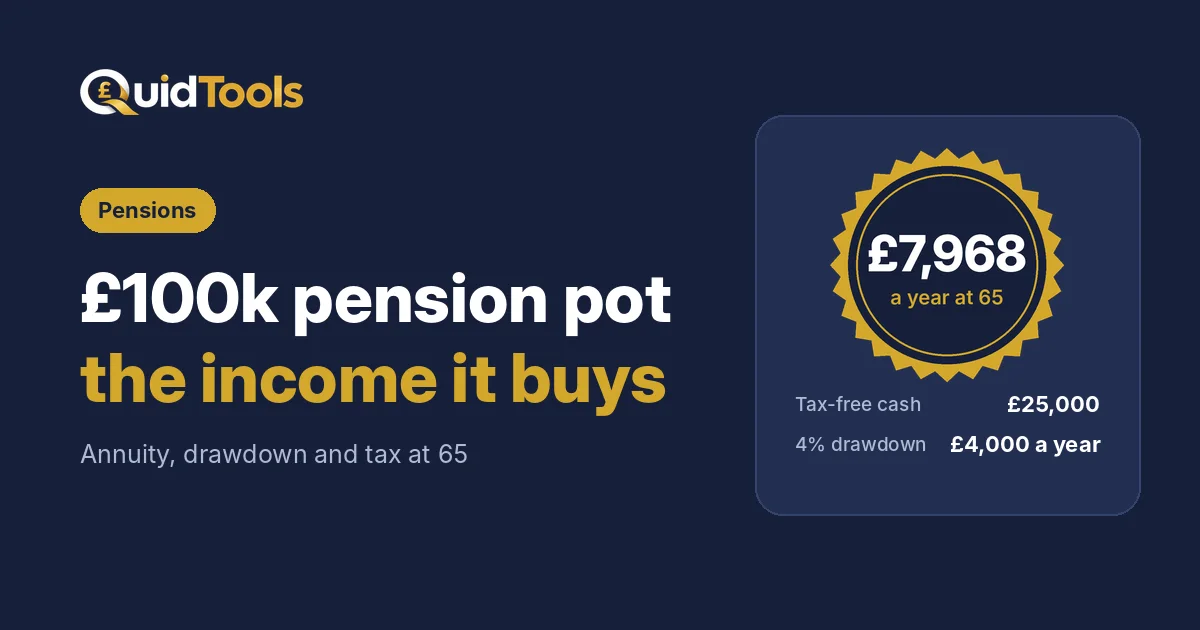
You have checked your pension statement and the pot is around £100,000. It sounds like a lot until you try to turn it into a monthly income. At 65 it buys about £7,968 a year for life from a level annuity, or £4,000 to £6,000 a year from drawdown if you want it to last into your late 80s. With the full State Pension of £12,547.60 on top, that is roughly £20,516 a year before tax.
What £100,000 buys as an annuity, by age
An annuity swaps your pot for a guaranteed income for life. The older you are when you buy, the more it pays, because it is expected to pay for fewer years. These are Hargreaves Lansdown quotes for a healthy person with £100,000, from August 2026, before tax:
| Annuity type | Age 55 | Age 60 | Age 65 | Age 70 | Age 75 |
|---|---|---|---|---|---|
| Single life, level, no guarantee | £6,820 | £7,209 | £7,968 | £8,709 | £9,969 |
| Single life, level, 5-year guarantee | £6,808 | £7,195 | £7,906 | £8,598 | £9,714 |
| Single life, RPI-linked, 5-year guarantee | £4,337 | £4,771 | £5,585 | £6,234 | £7,565 |
| Joint life 50%, level, no guarantee | £6,465 | £6,874 | £7,406 | £8,030 | £8,819 |
The level annuity looks best on day one but never rises. With 2% inflation, £7,968 a year buys what about £5,362 does today after 20 years. The RPI-linked one starts £2,383 a year lower and keeps its spending power. If you smoke, have high blood pressure, diabetes or another condition, tell the provider: an enhanced annuity can pay noticeably more. Quotes move with interest rates, so use these as a guide and get your own through the free Pension Wise service or the MoneyHelper annuity comparison.
Taking the £25,000 tax-free lump sum first
You can usually take 25% of the pot tax-free, so £25,000 from £100,000. The catch is that the remaining £75,000 buys a quarter less income: about £5,976 a year from a level annuity at 65 instead of £7,968.
Taking the cash makes sense if it clears a mortgage, a car loan or a credit card charging more than the annuity would pay you. It makes less sense if it would sit in a current account. You don’t have to take it all at once: in drawdown you can take a quarter of each withdrawal tax-free instead, which spreads the tax-free part across your retirement.
Drawdown: how long £100,000 lasts
In drawdown the pot stays invested and you take money out as you need it. Nothing is guaranteed: take too much, or have a bad run in the markets early on, and it runs out. This table assumes you take the same amount each year in today’s money, at the start of the year:
| Taken each year | Per month | Lasts, growing 2.5% above inflation | Lasts, no real growth |
|---|---|---|---|
| £4,000 | £333 | 38 years | 25 years |
| £5,000 | £417 | 27 years | 20 years |
| £6,000 | £500 | 21 years | 17 years |
| £7,000 | £583 | 17 years | 14 years |
| £8,000 | £667 | 15 years | 13 years |
| £10,000 | £833 | 11 years | 10 years |
From 65, £4,000 a year (the old “4% rule”) should last past 100 on the growth assumption. £6,000 a year lasts to about 86, which is close to average life expectancy for a 65-year-old, so there is a real chance of outliving it. Charges come out too: a 0.5% yearly fee is £500 a year on £100,000.
Compare that with the annuities above. The RPI-linked annuity pays £5,585 a year for life with inflation protection; drawdown pays a little more, £6,000, but only until the money runs out and only if returns hold up. The real advantages of drawdown are flexibility and what you can leave behind.
The tax you pay once the State Pension starts
Pension income is taxed like wages, but with no National Insurance. The full new State Pension is £12,547.60 a year in 2026/27, which uses up all but £22.40 of the £12,570 Personal Allowance. So almost every pound from your pot is taxed at 20%.
| Age 65, level annuity, 2026/27 | A year | A month |
|---|---|---|
| Full State Pension | £12,547.60 | £1,045.63 |
| Annuity from £100,000 | £7,968.00 | £664.00 |
| Income Tax | −£1,589.12 | −£132.43 |
| Income after tax | £18,926.48 | £1,577.21 |
The tax comes off the annuity through PAYE, and HMRC adjusts your tax code to collect it. From April 2027 the full State Pension rises to £13,036, above the frozen £12,570 allowance, so all of your pension income is taxed at 20% and about £93 of tax falls on the State Pension itself, usually collected through your annuity or drawdown tax code.
Drawdown can be taxed less. If you take each withdrawal as a mix of 25% tax-free and 75% taxable, £6,000 a year costs about £896 in tax instead of £1,196.
Using it before State Pension age
This is where a £100,000 pot can do the most. If you stop work at 60 and have no other income, you can take £16,760 a year completely tax-free: a quarter (£4,190) is the tax-free part and the other £12,570 is covered by your Personal Allowance. At that rate £100,000 lasts about 6.4 years, enough to bridge most of the gap to a State Pension age of 67.
Two things to watch. If you are still working, earnings use up the allowance, and taking taxable money from the pot cuts how much you can pay into pensions with tax relief to £10,000 a year (the money purchase annual allowance). And years without work may leave gaps in your National Insurance record; you need 35 qualifying years for the full State Pension. Check yours on GOV.UK before you stop.
Is £100,000 enough to retire on?
Pensions UK’s Retirement Living Standards put the yearly spending a single person needs, assuming the home is paid for, at:
- Minimum: £13,900. The State Pension nearly covers this alone.
- Moderate: £32,700, including a car and a foreign holiday each year.
- Comfortable: £45,400.
The State Pension plus an annuity from £100,000 gives about £18,926 after tax, comfortably above the minimum but well short of moderate. A couple with two full State Pensions and this pot would have about £31,474, past the couples’ minimum of £22,500 but short of the moderate £45,400. If you rent, you will need more. Our guide to how much you need to retire works out the pot for each standard.
How long it takes to build £100,000
The monthly total going into your pension (your contributions, your employer’s and tax relief together) to reach £100,000 in today’s money, growing 2.5% a year above inflation:
| Years to go | A month in total |
|---|---|
| 10 years | £734 |
| 15 years | £458 |
| 20 years | £322 |
| 25 years | £240 |
| 30 years | £187 |
| 40 years | £121 |
On the auto-enrolment minimum of 8% of qualifying earnings, someone on £35,000 puts in about £192 a month in total, which gets to £100,000 in a little under 30 years on these assumptions. See how much pension you should have by age to check you are on track.
Mistakes that cost people money
- Emergency tax on the first withdrawal. Your provider usually has no tax code yet, so the first payment is taxed as if you got it every month. Claim it back with form P55 if you took part of your pot, P53Z if you emptied it and have other income, or P50Z if you emptied it and have none.
- Taking it all in one tax year. £75,000 of taxable income in one year costs about £17,432 in tax with no other income, against about £2,430 in total if the taxable part is spread as £15,000 a year over five years with nothing else coming in.
- Taking the first annuity offered. Your own provider’s quote is rarely the best. Shopping around and declaring health conditions can add hundreds of pounds a year for life.
- Forgetting Inheritance Tax. From April 2027, money left in your pension counts towards your estate. Read pensions and Inheritance Tax if you plan to pass it on.
Which route suits a £100,000 pot
If you want to know exactly what lands each month and never think about markets, an annuity at 65 or later does that, and an RPI-linked one keeps pace with prices. If you are retiring before 67, drawdown taking up to £16,760 a year tax-free is hard to beat as a bridge, and many people then use what is left to buy an annuity. Book a free Pension Wise appointment before you decide; once an annuity is bought it can’t be undone.
General information, not financial advice. Tax figures are for 2026/27 in England, Wales and Northern Ireland; Scotland has different bands. Annuity quotes are Hargreaves Lansdown’s for a healthy person on 13 August 2026 and change with interest rates. Drawdown figures assume growth of 2.5% a year above inflation and no charges unless stated.
Sources
- Saga Money: annuity income from a £100,000 pot (Hargreaves Lansdown quotes, 13 August 2026)
- Which?: Annuity rates
- GOV.UK: Tax when you get a pension
- GOV.UK: Lump Sum Allowance
- GOV.UK: Pension annual allowance
- GOV.UK: The new State Pension
- HM Treasury: Budget 2026, rates and allowances (Annex A)
- GOV.UK: Claim a tax refund
- Pensions UK: Retirement Living Standards
- MoneyHelper: Pension Wise
- GOV.UK: Inheritance Tax on pensions from April 2027
Common questions
How much is a £100,000 pension pot a month?
About £664 a month before tax from a level annuity at 65, based on Hargreaves Lansdown quotes from August 2026. With the full State Pension using up your tax-free allowance, that is about £532 a month after basic rate tax. Drawdown at £6,000 a year is £500 a month before tax.
Can I take all £100,000 at once?
Yes, from age 55 (57 from April 2028), but a quarter is tax-free and the other £75,000 is taxed as income in that one year. With no other income that is about £17,432 of tax in 2026/27, much of it at 40%. Spreading withdrawals over several tax years usually keeps it all at 20%.
Is £100,000 a good pension pot at 60?
It is more than most people have, but on its own it buys about £7,209 a year from a level annuity at 60. Its real value is alongside the State Pension: at 60 it can pay up to £16,760 a year completely tax-free for about six years, which bridges the gap to State Pension age at 67 if you have no other income.
How long will £100,000 last in retirement?
Taking £6,000 a year, rising with inflation, it lasts about 21 years if the investments grow 2.5% a year above inflation, or about 17 years if they only keep pace. At £4,000 a year it lasts about 38 years. An annuity pays for life however long you live.
What happens to my £100,000 pension when I die?
Money left in drawdown can pass to anyone you nominate. From April 2027, unused pension pots count towards your estate for Inheritance Tax. A single-life annuity stops when you die unless you chose a guarantee period or a joint-life annuity for a partner.