
Real Living Wage 2026: £14.10 an hour as a yearly salary
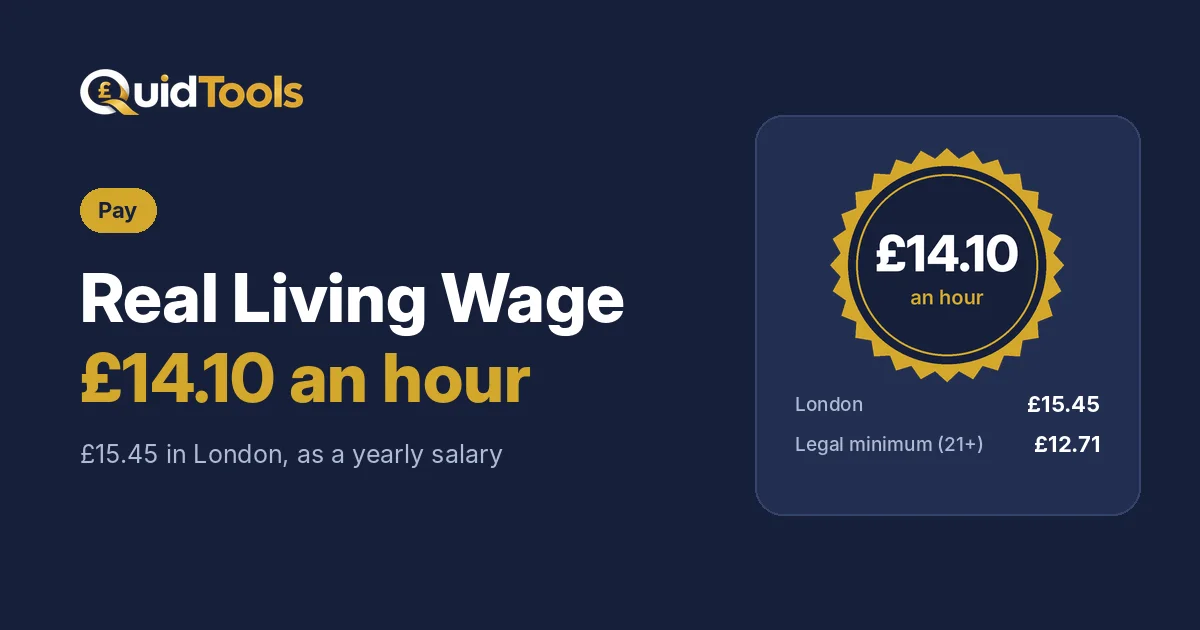
Your employer says it pays the Real Living Wage, or you have seen a job advert that does, and you want to know what it means in actual money. The Real Living Wage is £14.10 an hour across the UK and £15.45 in London. Full time on 37.5 hours a week, that is £27,495 a year, or about £1,943 a month after tax and National Insurance.
The 2026 rates and when they start
| Area | Old rate | New rate | Rise |
|---|---|---|---|
| UK outside London | £13.45 | £14.10 | 65p (4.8%) |
| London | £14.80 | £15.45 | 65p (4.4%) |
The Living Wage Foundation announced the new rates on 15 October 2026. Accredited employers must pay them by 1 May 2027, so if your payslip still shows £13.45 in the meantime, your employer is not breaking its commitment. Many councils, universities and large employers move to the new rate earlier.
Real Living Wage as a yearly and monthly salary
| Hours a week | A year (UK) | A month after tax (UK) | A year (London) | A month after tax (London) |
|---|---|---|---|---|
| 16 | £11,731 | £978 | £12,854 | £1,065 |
| 20 | £14,664 | £1,173 | £16,068 | £1,257 |
| 25 | £18,330 | £1,393 | £20,085 | £1,498 |
| 30 | £21,996 | £1,613 | £24,102 | £1,739 |
| 35 | £25,662 | £1,833 | £28,119 | £1,980 |
| 37.5 | £27,495 | £1,943 | £30,128 | £2,101 |
| 40 | £29,328 | £2,053 | £32,136 | £2,221 |
After Income Tax and National Insurance for 2026/27, tax code 1257L, no pension or student loan. Workplace pension contributions under auto-enrolment would take a few per cent more. On 16 or 20 hours a week most of the pay falls inside the £12,570 tax-free allowance, so the take-home is close to the gross.
How much more it is than the minimum wage
The legal minimum for anyone 21 or over is the National Living Wage, £12.71 an hour until 31 March 2027. Full time, the Real Living Wage pays:
- £2,710 a year more than the National Living Wage now, which is about £163 a month after tax.
- £1,735 a year more than the National Living Wage of £13.21 from 1 April 2027, assuming the Real Living Wage is not raised again before then.
- £6,338 a year more than the £10.85 legal minimum for 18 to 20-year-olds. The Real Living Wage has no lower youth rate, so young workers gain the most.
Who gets it and who doesn’t
The Real Living Wage is voluntary. You only have a right to it if your employer is accredited with the Living Wage Foundation, or your contract or a collective agreement says so. Accredited employers commit to paying it to:
- all their own staff aged 18 and over, including part-time and temporary workers,
- regular contracted staff working on their premises, such as cleaners, caterers and security staff employed by an outside firm.
Apprentices and interns can be treated differently, so check the employer’s policy. You can search for accredited employers on the Living Wage Foundation’s website. Some employers pay at or above the rate without being accredited, and they are free to stop.
The rate is the same in England, Scotland, Wales and Northern Ireland, with a higher rate only for London.
How the rate is worked out
The National Living Wage is set by the government, on advice from the Low Pay Commission, as a share of typical earnings. The Real Living Wage is worked out independently from what households need to cover everyday costs: rent, bills, food, transport and childcare. The London rate is higher because housing and travel cost more there. That is why the two rates can move by different amounts each year.
Checking your pay
Divide your basic pay for a period by the hours you worked in it. If your employer is accredited and the answer is below £14.10 after 1 May 2027 (or £15.45 in London), raise it with HR or payroll first, then with the Living Wage Foundation. Tips and overtime premiums do not count towards the rate. If your pay is below the legal minimum, that is a separate issue for HMRC: see minimum wage as a yearly salary.
For your own hours, the hourly to salary calculator shows weekly, monthly and yearly pay after tax. If you are on fewer hours, see 16 hours a week pay and part-time work and Universal Credit.
Sources
Common questions
What is the Real Living Wage for 2026?
£14.10 an hour across the UK and £15.45 in London, announced on 15 October 2026. Accredited employers have until 1 May 2027 to start paying it.
How much is the Real Living Wage a year?
On a 37.5-hour week, £27,495 a year outside London and £30,128 in London, before tax. That is about £1,943 and £2,101 a month after tax and National Insurance.
Is the Real Living Wage a legal requirement?
No. It is voluntary. The legal minimum is the National Living Wage, £12.71 an hour for those 21 and over until 31 March 2027. Only employers accredited by the Living Wage Foundation have committed to the higher rate.
Does the Real Living Wage apply to under-21s?
Yes. It applies to everyone aged 18 and over. That makes the biggest difference for 18 to 20-year-olds, whose legal minimum is only £10.85 an hour.
When does the Real Living Wage go up?
New rates are announced each October, during Living Wage Week. Accredited employers then have until 1 May the following year to pay them, though many pay the new rate straight away.