UK mortgage rates are rising: what the 4% base rate means for your remortgage
On Thursday the Bank of England did something it hasn’t done for over three years: it put interest rates up. The base rate went from 3.75% to 4%, and the vote wasn’t close. Eight of the nine committee members wanted a quarter-point rise, and the ninth wanted to go further.
The reason is inflation, which has crept back up to 3.5%, mostly because the conflict in the Middle East has pushed up energy prices. The Bank’s view is that it needs to see real progress there before prices settle.
If you have a mortgage, the first thing to know is that this rise affects people very differently depending on what kind of deal they’re on.
If you’re on a fixed rate, nothing changes yet
Your payment is locked until your deal ends, whatever the Bank does. The question is what you’ll face when it runs out. The awkward truth is that lenders had already priced this rise in weeks ago. The average two-year fix was 5.96% at the start of this week and the average five-year fix was 5.99%, both well up on where they were in the spring.
If you’re on a tracker, you’ll feel it next month
Trackers follow the base rate, so yours has just gone up by 0.25 percentage points. On a £200,000 mortgage with 25 years left, going from 4.75% to 5% adds about £29 a month. It’s not a disaster, but it’s another bill going the wrong way, and the next decision is on 17 December.
The people hit hardest: anyone coming off a cheap fix
This is where the real pain is. A lot of people fixed for five years in 2021, when rates under 2% were normal. Those deals are ending now.
I ran the numbers for a typical case. Say you borrowed £220,000 over 25 years in late 2021 at 1.8%. You’ve been paying about £911 a month. Five years on, you owe roughly £183,500 with 20 years to go. Move that onto today’s average two-year fix and your payment jumps to about £1,311.
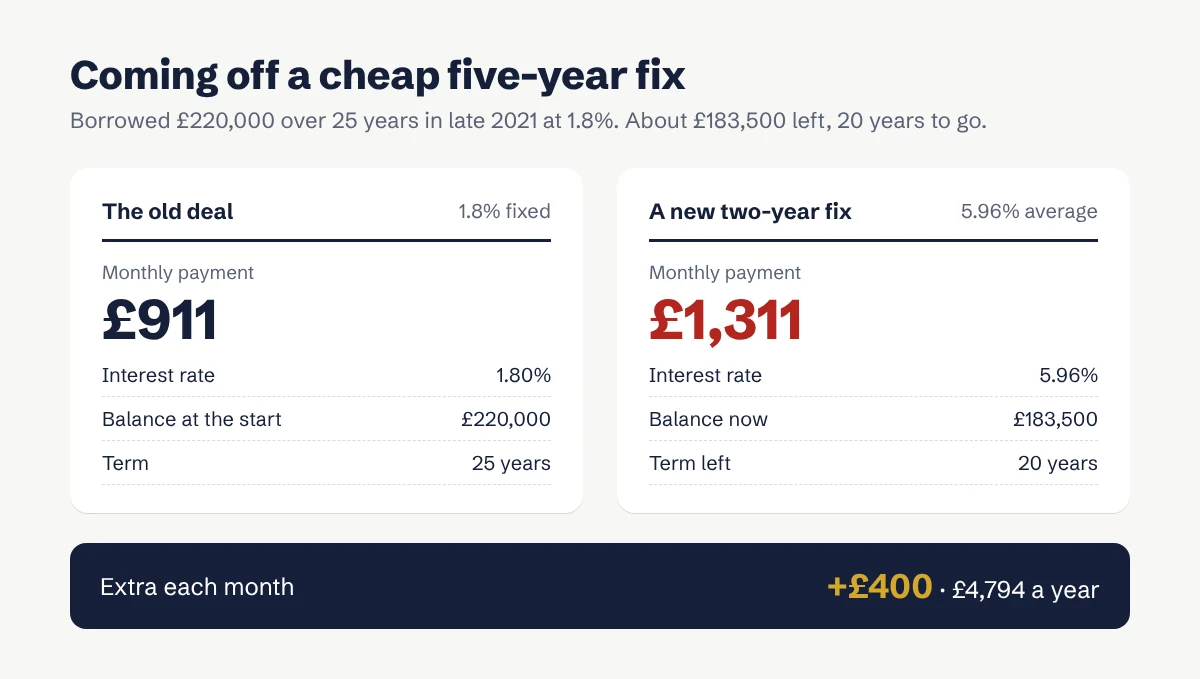
That’s £400 a month more, or nearly £4,800 a year, for the same house and the same loan, just a different rate.
What are your options?
There’s no magic fix, but some choices are clearly better than others.
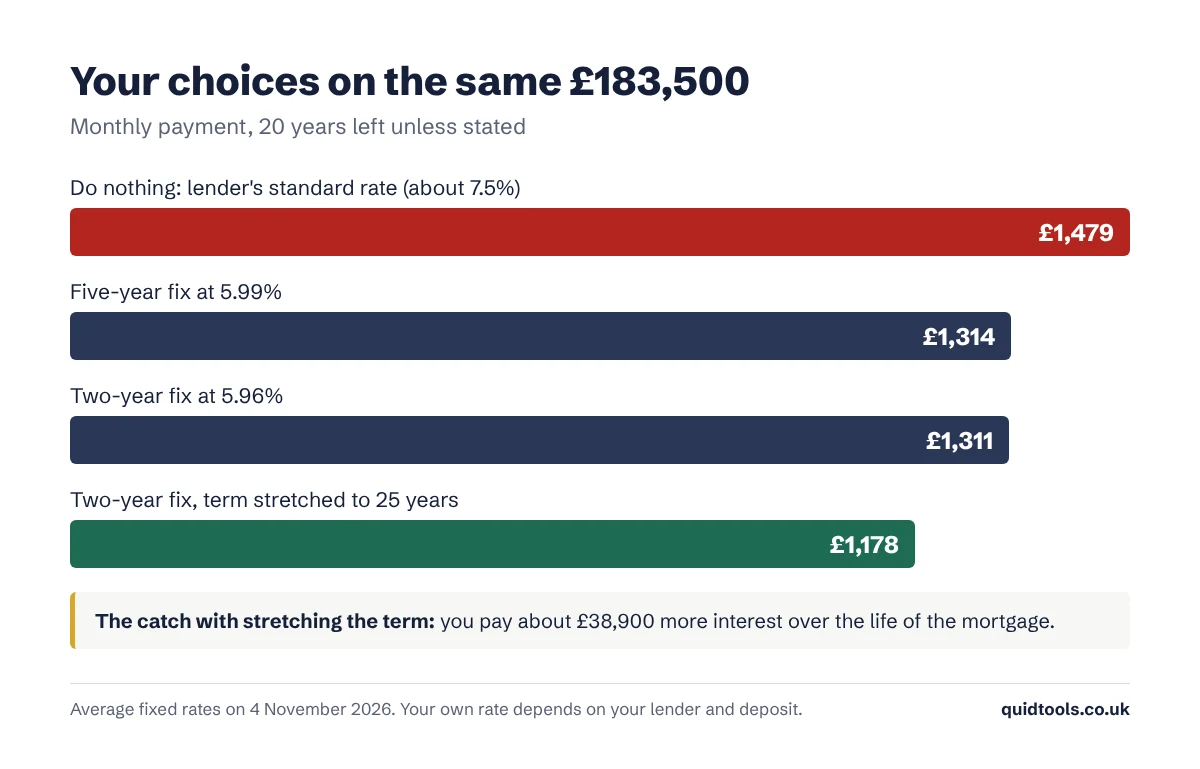
The worst thing you can do is nothing. If your fix ends and you don’t arrange a new deal, you’ll usually drop onto your lender’s standard variable rate, which is often 7% to 8%. On our example that’s close to £1,480 a month, around £170 more than taking a new fix.
You can usually lock in a new deal up to six months before your current one ends. If rates fall before you complete, many lenders and brokers will let you switch to the cheaper deal, so there’s little downside to securing one early.
Stretching your mortgage term brings the payment down, to about £1,178 in our example if you go back to 25 years. It can be a lifeline if your budget is tight, but be honest with yourself about the cost: you’d pay roughly £38,900 more in interest overall.
If you’ve got some savings, overpaying before your fix ends shrinks the balance you have to refinance. Most fixed deals let you overpay up to 10% a year without a charge. After you’ve switched, even £100 a month extra on our example would clear the mortgage two and a half years sooner and save about £18,700 in interest.
Will rates come back down?
Nobody knows, and I’d be wary of anyone who says they do. The Bank has said it will keep responding to how inflation behaves, and much of that depends on events a long way from the UK. If you’re choosing between a two-year and a five-year fix, the rates are almost identical right now. It comes down to whether you’d rather have certainty for longer or the chance to switch sooner if things improve.
Work out your own numbers
Everyone’s situation is different, so the examples above are just a guide. Our mortgage calculator will show your new monthly payment at any rate, and the mortgage overpayment calculator shows what a few extra pounds a month could save you. If you’re buying rather than remortgaging, the affordability calculator shows how much lenders are likely to offer at today’s rates.
This is general information, not financial advice. Rates change daily, so speak to a mortgage broker or your lender before making a decision.