
How to get out of car finance: every way out, and which one fits
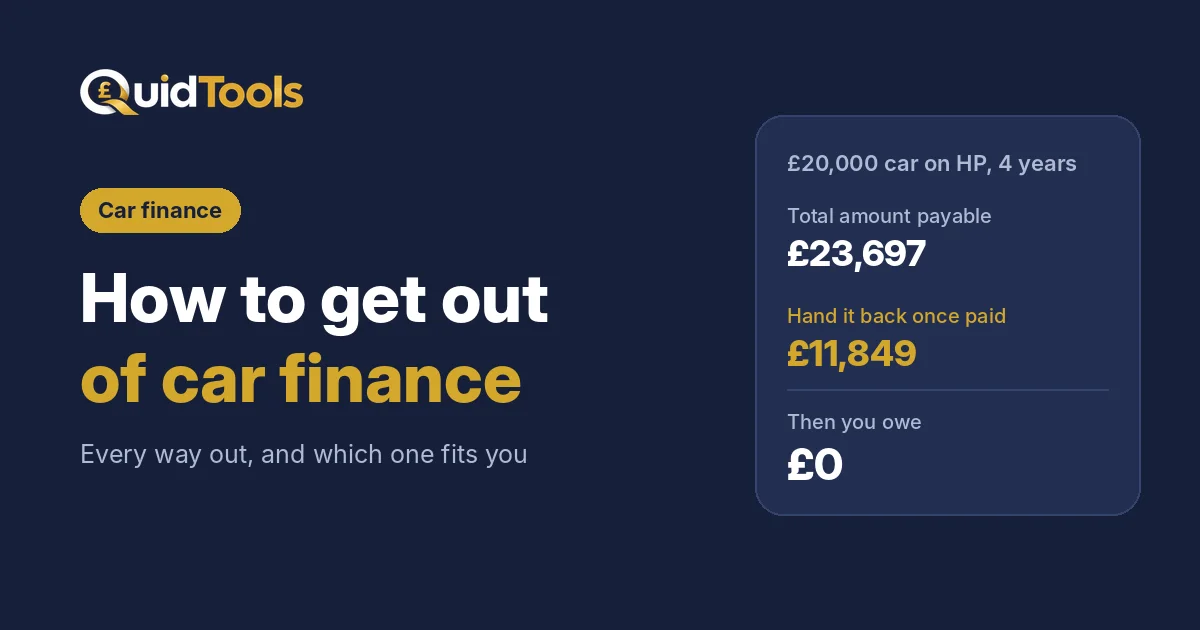
You want out of a car finance deal: the car doesn’t suit you any more, it’s faulty, or the payments have become too much. You have more ways out than most people think, and the right one depends on how long you’ve had the deal, what type of finance it is and what the car is worth against what you owe. On hire purchase or PCP, the most important number is the halfway point: once you’ve paid half the total, you can hand the car back and owe nothing more.
Which way out fits your situation
| Your situation | Best way out |
|---|---|
| You signed in the last 14 days and changed your mind | Withdraw from the finance agreement (cooling-off) |
| The car has a fault | Reject it under the Consumer Rights Act |
| You’ve paid half the total on HP or PCP | Voluntary termination: hand it back, nothing more to pay |
| The car is worth more than you owe | Sell or part-exchange it and clear the settlement figure |
| You can afford to clear the balance | Settle early and save some interest |
| You’re struggling with the payments | Talk to the lender and get free debt advice |
| It’s a lease (PCH) | Ask for an early termination quote; there is no right to hand it back |
In the first 14 days: the cooling-off period
The Consumer Credit Act gives you 14 days after signing to withdraw from a regulated finance agreement, without giving a reason. You tell the lender in writing, then repay the amount borrowed plus interest for the days you had it, within 30 days.
The catch is that withdrawing cancels the finance, not the car purchase. On hire purchase or PCP that usually means you have to pay for the car yourself. It suits people who have found cheaper borrowing, not people who no longer want the car. You can return the car itself in that time only if it’s faulty, or if you bought it online or away from the dealer’s premises, where separate 14-day cancellation rules apply.
If the car is faulty
Under the Consumer Rights Act 2015 a car must be of satisfactory quality, fit for purpose and as described. If it isn’t:
- Within 30 days you can reject it for a full refund.
- Within six months you can ask for a repair or replacement. If that fails, you can reject it, with a deduction for the use you’ve had.
- On hire purchase or PCP the finance company supplied the car, so you make the claim to the lender, not the dealer. Rejecting the car ends the finance agreement too.
Put the complaint in writing and keep evidence, such as a garage report. If the lender says no, you can take it to the Financial Ombudsman Service for free.
Once you’ve paid half: voluntary termination
On hire purchase and PCP you have a legal right to hand the car back once you’ve paid half the total amount payable, including the deposit, fees and any balloon payment, as long as you’ve taken reasonable care of it. You then owe nothing more.
Take a £20,000 car with a £2,000 deposit on hire purchase at 9.9% APR over four years. The total amount payable is £23,697, so the halfway point is £11,849. With payments of £452 a month, you reach it after about 22 payments. Before then, you can still hand the car back by paying up to the halfway point. On PCP the large balloon payment counts in the total, so the halfway point comes later. The full guide is voluntary termination.
Selling, part-exchanging or settling early
You can’t sell a car on hire purchase or PCP while there is money owing, because the lender owns it. But you can ask the lender for a settlement figure, which is what you’d pay to clear the deal today, and sell or part-exchange the car to cover it. Dealers do this every day.
On the example above, after two years the settlement figure would be about £9,996, against £10,849 of payments left, a saving of about £853. If the car is worth more than the settlement figure, selling puts the difference in your pocket. If it’s worth less, voluntary termination may cost you less. See paying off car finance early.
If you can’t afford the payments
- Talk to the lender before you miss a payment. FCA rules say it must treat you fairly if you’re in difficulty, and it can agree a payment plan, a short break or reduced payments.
- Know the one-third rule. Once you’ve paid a third of the total on hire purchase or PCP (£7,899 in the example, about 14 payments in), the car becomes “protected goods” and the lender needs a court order to take it back.
- Avoid voluntary surrender if voluntary termination is open to you. Surrender means the car is sold, often at auction, and you still owe the shortfall.
- Get free advice from StepChange, National Debtline or Citizens Advice, especially if car finance is one of several debts.
Don’t simply stop paying. Missed payments go on your credit file, and the lender can end the agreement and ask for the full balance.
At the end of a PCP
At the end of a PCP you have three choices: hand the car back and pay nothing more (subject to mileage and condition), pay the balloon and keep it, or part-exchange it. If the car is worth more than the balloon, that equity can go towards your next car. See the PCP balloon payment.
Leases and personal loans
- Personal contract hire (a lease): you never own the car and there is no right to voluntary termination. Ending early means paying an early termination charge, which is often a large share of the payments left. Ask for a quote in writing.
- A personal loan: the car is yours, so you can sell it whenever you like and use the money to repay the loan. You have a right to settle the loan early with a reduction in interest. See car loan vs car finance.
Your credit file
Settling early, selling the car or using voluntary termination are normal ways to end an agreement and usually show as settled. Missed payments, defaults and voluntary surrender with a shortfall are the ones that hurt. That’s why it pays to choose a way out before the payments start slipping.
To find your total amount payable, and so your halfway point, use the car finance calculator. Your lender will give you an exact settlement figure on request.
Sources
- legislation.gov.uk: Consumer Credit Act 1974, s66A (withdrawal)
- Consumer Credit Act 1974, section 99: voluntary termination
- legislation.gov.uk: Consumer Credit Act 1974, s90 (protected goods)
- legislation.gov.uk: Consumer Rights Act 2015, s20 to s24 (rejecting goods)
- MoneyHelper: struggling with car finance
Common questions
Can I give my car back to the finance company?
On hire purchase or PCP, yes, once you have paid half the total amount payable. This is voluntary termination under the Consumer Credit Act. If you have paid less, you can still hand it back but must pay up to the halfway point first.
Can I return a car on finance within 14 days?
You can withdraw from the finance agreement within 14 days, but on hire purchase or PCP that usually means paying for the car yourself rather than handing it back. You can only return the car itself in that time if it is faulty or you bought it online or away from the dealer’s premises.
What happens if I can’t afford my car finance payments?
Contact the lender before you miss a payment. It must treat you fairly and consider options such as a payment plan. Once you have paid a third of the total, it cannot repossess the car without a court order. Free debt advice is available from StepChange, National Debtline and Citizens Advice.
Can I cancel car finance if the car is faulty?
Yes. Under the Consumer Rights Act you can reject a faulty car within 30 days for a full refund, and later if a repair fails. On hire purchase or PCP you make the claim to the finance company, because it supplied the car.
Is voluntary surrender the same as voluntary termination?
No. Voluntary termination is a legal right that caps what you owe at half the total. Voluntary surrender is not: the lender sells the car, often at auction, and you owe whatever is left. Always ask for voluntary termination by name.