The 60% tax trap: why a pay rise over £100,000 barely shows, and how to fix it
There’s a strange stretch of the UK tax system where you keep less of each pay rise than someone earning far more than you. It sits between £100,000 and £125,140, and anyone in it pays an effective 60% Income Tax on every extra pound, or 62% once National Insurance is added.
Nobody voted for a 60% tax rate. It happens by accident, because of how the tax-free allowance is taken away. But the effect is very real, and with thresholds frozen until 2031, more people drift into it every year.
Why it happens
Everyone starts with a £12,570 personal allowance. Once your income goes over £100,000, you lose £1 of that allowance for every £2 you earn above it. By £125,140 it’s gone completely.
So when you earn an extra £2 in this band, two things happen at once. You pay 40% higher-rate tax on the £2, which is 80p. And £1 of income that used to be tax-free now gets taxed at 40% too, which is another 40p. That’s £1.20 of tax on £2 of pay: 60%.
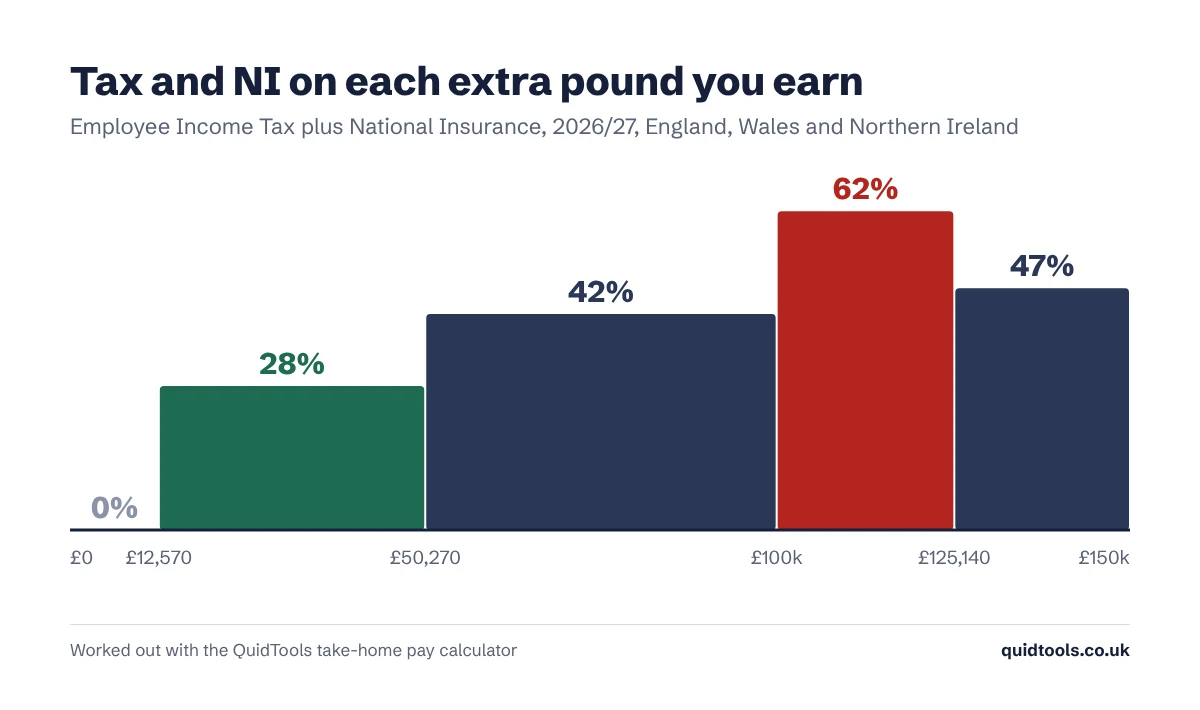
The odd part is what happens above £125,140. Your allowance is already gone, so you just pay the 45% additional rate plus 2% NI. Someone on £130,000 keeps more of their next pay rise than someone on £110,000.
What a £10,000 pay rise is really worth
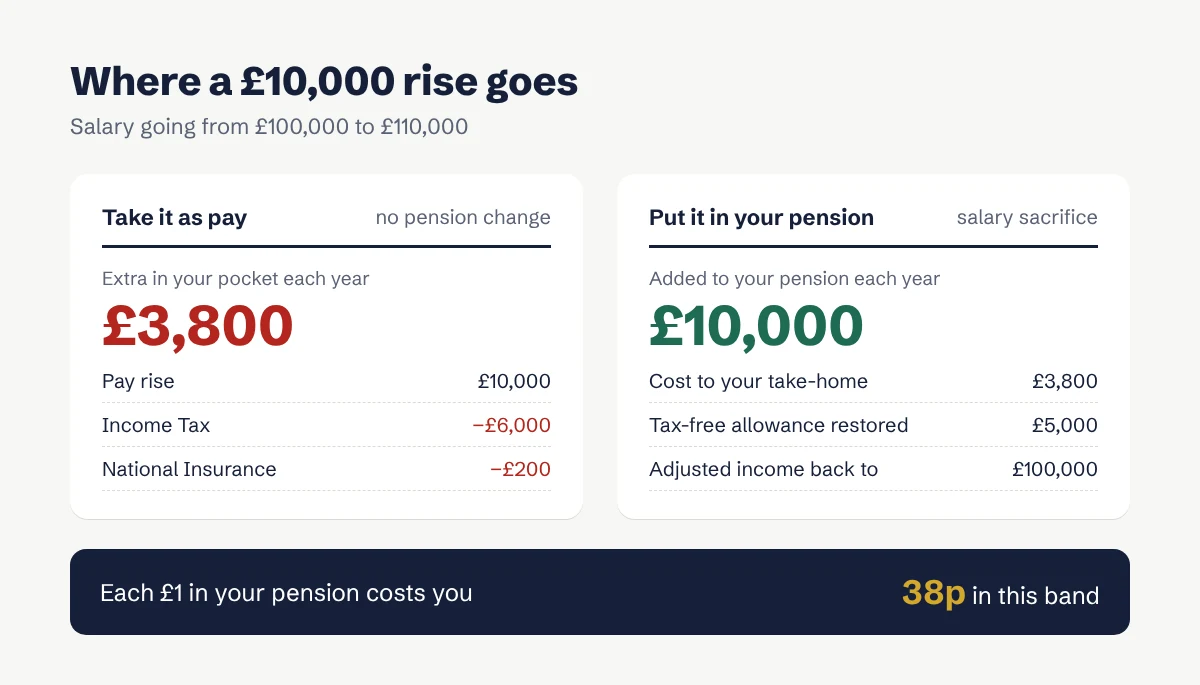
I ran the numbers on someone going from £100,000 to £110,000. On paper it’s a £10,000 rise. In practice, £6,000 goes in Income Tax and £200 in National Insurance, and they keep £3,800. That’s 38p in every pound.
The childcare cliff edge
If you have young children, the trap can be much worse than 60%. Tax-Free Childcare (worth up to £2,000 a year per child) and the government’s funded childcare hours both stop completely if either parent’s adjusted net income goes over £100,000. It isn’t tapered. Going £1 over can cost you thousands.
For a family with two children in nursery, crossing that line could wipe out more than the whole of a modest pay rise. If you’re anywhere near £100,000 and paying for childcare, this matters more than anything else in this article.
How to get out of the trap
The trick is that the taper doesn’t look at your salary. It looks at your adjusted net income, which is your total taxable income minus certain things, mainly pension contributions and Gift Aid donations. Bring that figure down to £100,000 and you get your full allowance back.
Pay more into your pension. This is the main route, and it’s remarkably good value in this band. Put the £10,000 from our example into your pension through salary sacrifice and the whole £10,000 goes in, but your take-home falls by only £3,800. Every pound in your pension effectively costs you 38p.
How you pay in matters a little. Salary sacrifice and “net pay” workplace schemes reduce your taxable pay automatically. If you pay into a personal pension or SIPP yourself, the provider adds basic-rate relief, and you claim the rest back through a Self Assessment tax return. Either way, it’s the gross contribution that comes off your adjusted net income.
Gift Aid. Donations to charity under Gift Aid also reduce your adjusted net income. It’s not a money-saving trick, since you’re still giving the money away, but if you give regularly anyway, it helps.
Other salary sacrifice schemes, like an electric car or cycle to work, reduce your taxable pay too, so they can also help.
A couple of things to watch
Pension money is locked away until at least age 57 from 2028, so only put in what you won’t need before then. There’s also an annual allowance on how much you can pay into pensions with tax relief, normally £60,000 a year including your employer’s contributions. It can be lower for very high earners, but most people in this band won’t come near it.
And remember that bonuses count. Plenty of people on a £90,000 salary get pushed over £100,000 by a bonus in one year. Some employers let you sacrifice part or all of a bonus into your pension, which can avoid the problem completely.
Run your own numbers
Our take-home pay calculator handles the allowance taper automatically. Try your salary with and without a pension contribution and see how much your take-home really changes. To see where that extra pension money could end up by retirement, try the pension calculator.
This is general information, not tax or financial advice. Figures use 2026/27 rates for England, Wales and Northern Ireland. In Scotland the trap still exists but the rates are different. If you’re making large pension contributions, it’s worth speaking to a financial adviser.