Autumn Budget 2026 explained: what changes for your pay, savings and pension
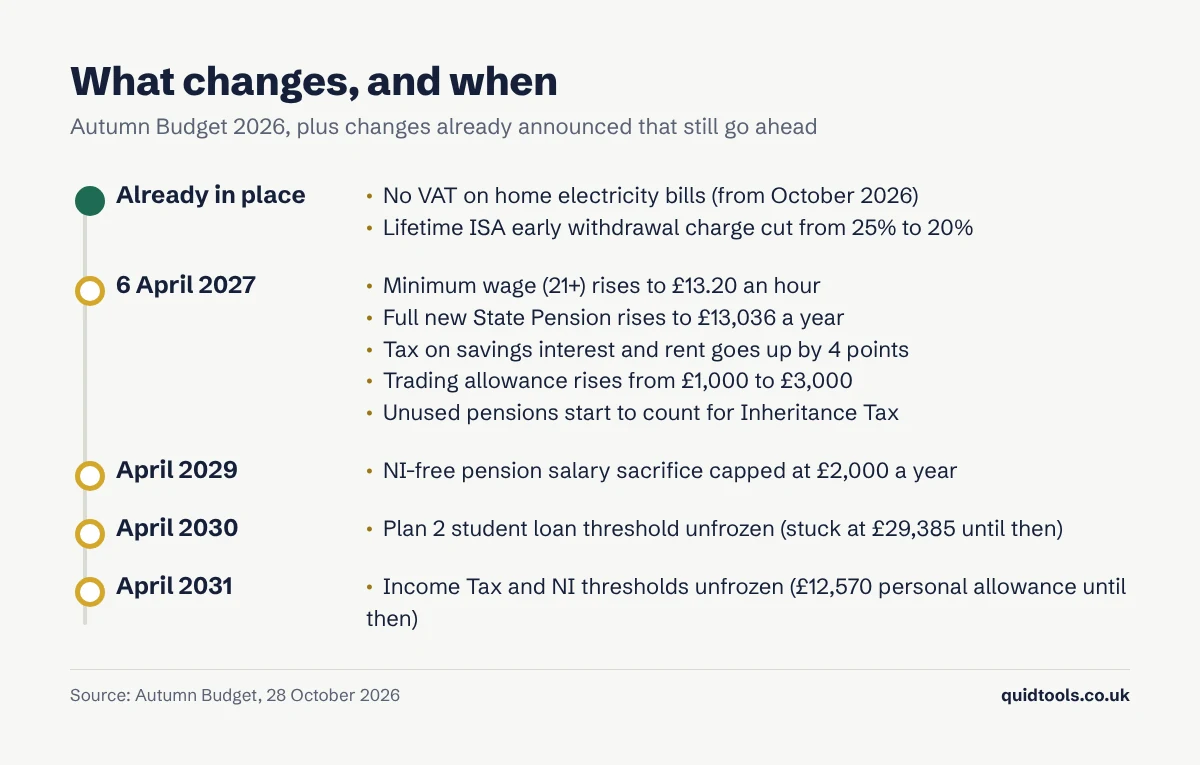
If you skipped the Budget coverage last week, I don’t blame you. John Healey’s first Budget as Chancellor was a quiet one: no rise in Income Tax, National Insurance or VAT, and nothing like the shocks we got the year before. For most people, nothing changes until next April.
But “quiet” isn’t the same as “nothing”. A few changes will show up on payslips and savings statements next year, and one of last year’s announcements has been quietly reversed. Here’s what I think is worth knowing, with real numbers.
Your pay: no tax rise, but the freeze still bites
The headline rates haven’t moved. What hasn’t moved either are the thresholds. The £12,570 tax-free allowance and the £50,270 higher-rate line stay frozen until April 2031, and that’s where the real cost is.
Here’s how it works. Say you earn £35,000 and get a 3% pay rise next year. That’s £1,050 more on paper, but about £756 of it reaches your bank account. The rest goes in tax and NI, because none of the bands have moved up to meet you. Nobody announces it as a tax rise, but year after year it works like one.
If you want to see what your own pay rise is really worth, our pay rise calculator shows the before-and-after.
A decent rise for minimum wage workers
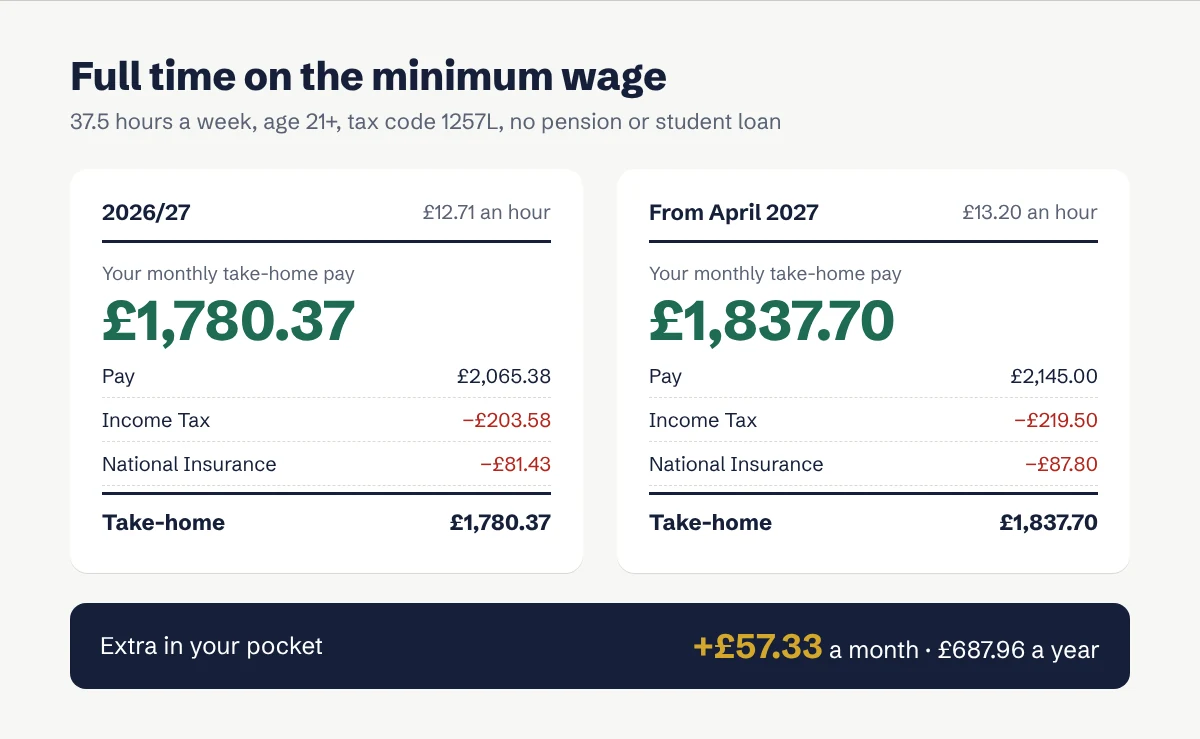
From 6 April 2027 the National Living Wage goes up from £12.71 to £13.20 an hour for anyone 21 or over. Younger workers get more too: £11.27 for 18 to 20-year-olds and £8.31 for apprentices.
On a full-time week of 37.5 hours, I worked it out at about £57 a month more after tax and NI. That’s not life-changing, but it’s nearly £700 over a year.
If you work fewer hours, put your own into the part-time pay calculator. It’ll also show you the new hourly figure once April comes.
Savers: the ISA is more useful than ever
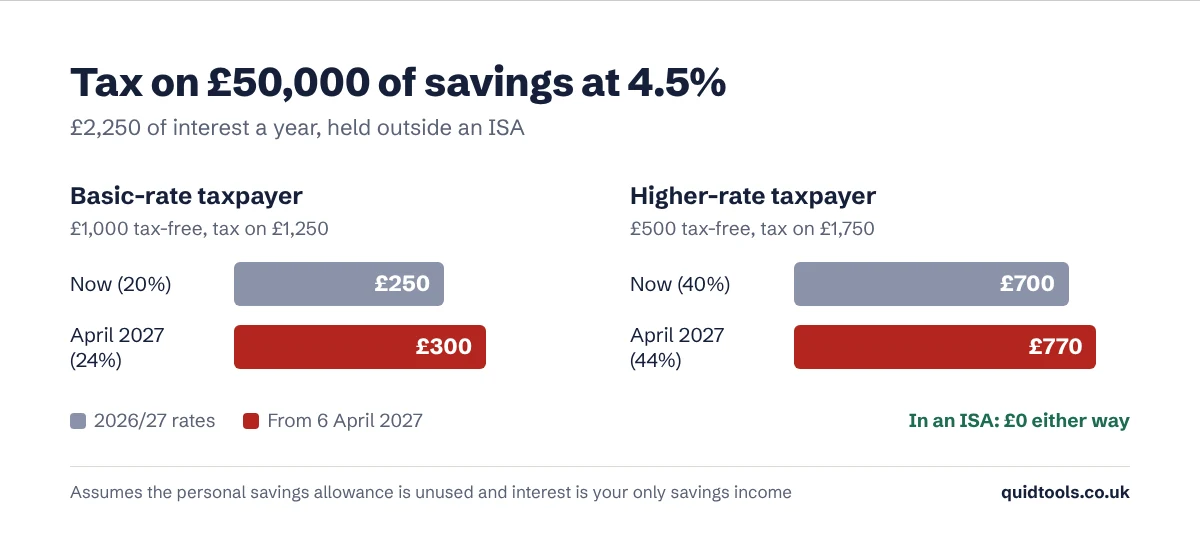
This is the change I’d pay most attention to. From April 2027, tax on savings interest outside an ISA rises by four points, to 24% for basic-rate taxpayers, 44% for higher-rate and 49% for additional-rate.
Before anyone panics: the personal savings allowance stays as it is. A basic-rate taxpayer still gets £1,000 of interest a year tax-free, and a higher-rate taxpayer gets £500. You’d need roughly £22,000 sitting in a 4.5% account before a basic-rate taxpayer pays a penny. Plenty of people won’t be affected at all.
If you do have a decent pot outside an ISA, though, this is your nudge. Last year’s plan to cut the cash ISA allowance to £12,000 has been dropped, so you can still put £20,000 a year somewhere the taxman can’t touch. Moving money before April costs you nothing and could save you a fair bit.
One smaller change: if you have a Lifetime ISA and take money out for something other than a first home or retirement, the penalty falls from 25% to 20%. It’s still a penalty, but a smaller one.
Pensions and the State Pension
The triple lock survives, so the full new State Pension goes up 3.9% next April to £13,036 a year. That’s now above the £12,570 tax-free allowance, which would have meant pensioners with nothing else coming in paying a few pounds of Income Tax. The government says a new allowance will stop that happening, and the full details will follow.
Two things announced last year are still going ahead:
- From April 2027, unused pension pots will count towards your estate for Inheritance Tax.
- From 2029, only the first £2,000 a year of pension salary sacrifice will be free of National Insurance.
If you’re planning ahead, the pension calculator will give you a rough picture of your retirement income.
Graduates, landlords and anyone with a side hustle
If you’re on a Plan 2 student loan, the repayment threshold stays frozen at £29,385 until 2030. You’ll quietly repay a little more each year as your pay goes up. Whether that matters depends on whether you’d ever clear the loan anyway, and the student loan calculator is the quickest way to find out.
Landlords get the same four-point rise as savers on rental profit from April 2027.
There’s good news for anyone selling bits on the side: the trading allowance triples from £1,000 to £3,000. You’ll be able to make up to £3,000 a year from small jobs or selling things you’ve made before you need to tell HMRC.
What didn’t change
There was a lot of talk before the Budget about Capital Gains Tax, Inheritance Tax and stamp duty. In the end none of them moved. CGT stays at 18% and 24% with a £3,000 allowance. The Inheritance Tax thresholds are unchanged, and so is stamp duty on homes.
So what should you actually do?
Honestly, for most people, not much. If you have savings outside an ISA, think about moving some of them before April. If you’re on the minimum wage, check your April 2027 payslip shows the new rate. And if a pay rise is about to push you past £50,270 or £100,000, it’s worth looking at whether paying more into your pension would keep more of it.
Everything else can wait until next spring, when we’ll update all our calculators for the new tax year.
This is general information, not financial advice. It’s based on what was announced on 28 October 2026, and details can change before they become law.